Copart Vehicle Collection and Delivery
Copart stock is salvage, so almost nothing drives off the row. We collect from Copart sites across the UK and deliver anywhere in England, and every job is planned on the basis that the vehicle will need winching rather than driving.
Written for repairers, rebuilders and exporters
Repairers, rebuilders and exporters
This is a trade audience buying damage on purpose. They already know the vehicle does not drive; what they need is a transporter that will not baulk at a folded front end, will not charge extra once it sees the car, and will deliver into a workshop or a container yard.
Category stock, from light damage to shells
Category stock across the whole range, from a light knock with airbags deployed to a stripped shell on four flat tyres. Fluid leaks, sharp edges and missing suspension components are all part of the day, and each one changes how the vehicle is lifted.
Salvage yards operate differently to a car auction
Copart operates from a network of regional sites rather than a single centre, and each one has its own gate procedure, storage layout and release window. Vehicles are often parked tightly in rows on gravel or hardstanding, which affects how easily a damaged car can be pulled out. When you book we confirm which site the lot is at, because that decides the route and the truck.
What we need for a salvage collection
We need the lot number, the Copart site, the release or gate pass documentation, the buyer name, and the delivery address. Tell us the damage category and, as far as you know, whether the wheels turn and the vehicle steers. Storage charges accrue at Copart, so give us the free storage end date and we will prioritise the collection.
Release windows, storage charges and getting in the gate
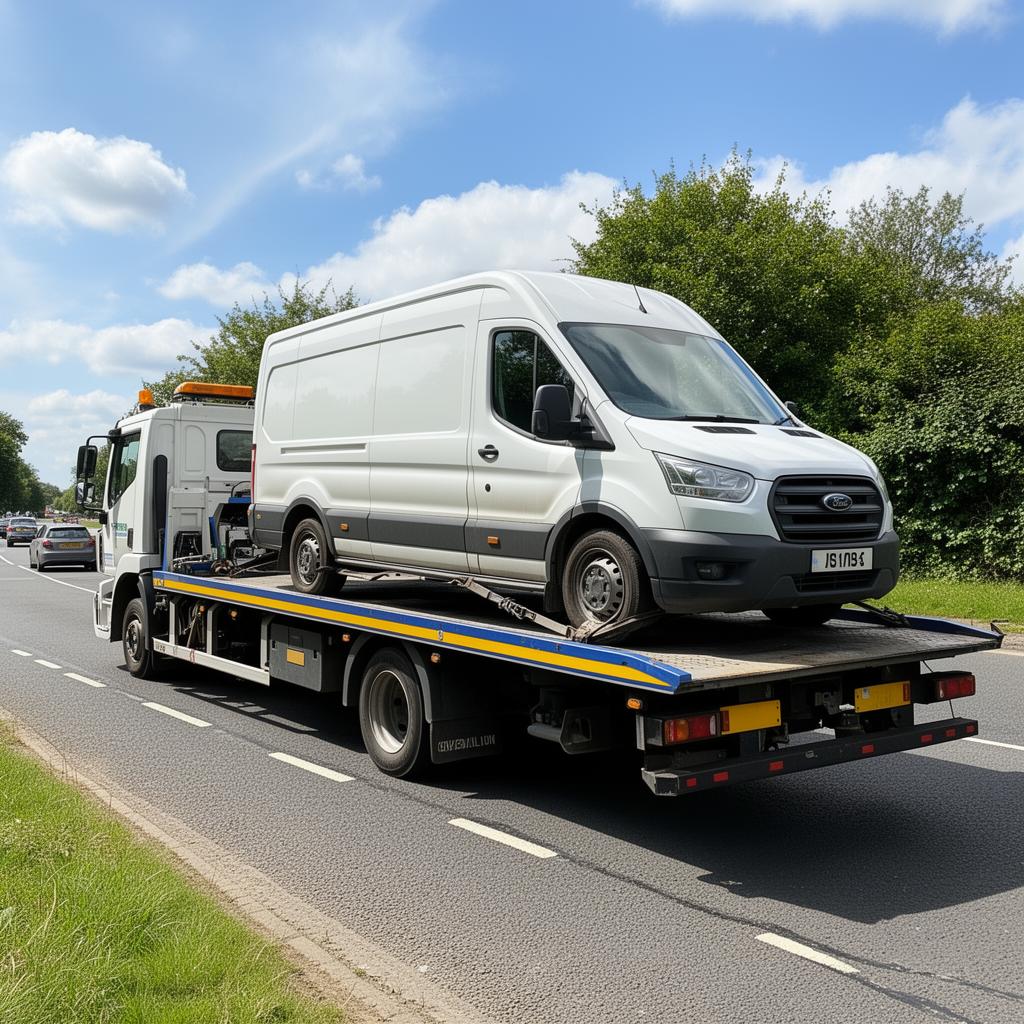
We work from your lot number and release paperwork. The driver reports to the gate, locates the vehicle in the yard, and assesses whether it can be winched directly or needs skates because the wheels will not turn. Damaged vehicles are photographed as found before anything is moved, which protects both sides if there is a dispute about condition. Loading is always on a flatbed.
Recovering a vehicle that no longer rolls
Recovery here starts with an assessment rather than a winch cable. If a corner is collapsed the wheel is skated. If suspension is detached the pull point moves. Sharp bodywork gets covered, and leaking vehicles are positioned so nothing runs down the bed. Straps go to structure that is still structure.
Bought damaged? Tell us how bad
Wheels turning, steering intact, anything detached. The more you tell us, the more accurate the price and the right truck first time.
Salvage collection questions
Handling damaged vehicles properly
- Category damaged vehicles collected as routine, not as a favour
- Skates, spreader bars and covers carried for stripped vehicles
- Delivery into workshops, body shops and container yards
- Quote holds once the driver sees the damage
In brief
Damage is the product, not the problem. The skill is assessing how a broken vehicle can be moved before touching it, and quoting a price that survives first sight of the car.